The 40-yard is the top of the five-size lineup. Powerhouse Dumpster Rental carries a 10-yard at $595, a 15-yard at $650, a 20-yard at $695, a 30-yard at $795, and the 40-yard at $895, every price flat and all-in. The…
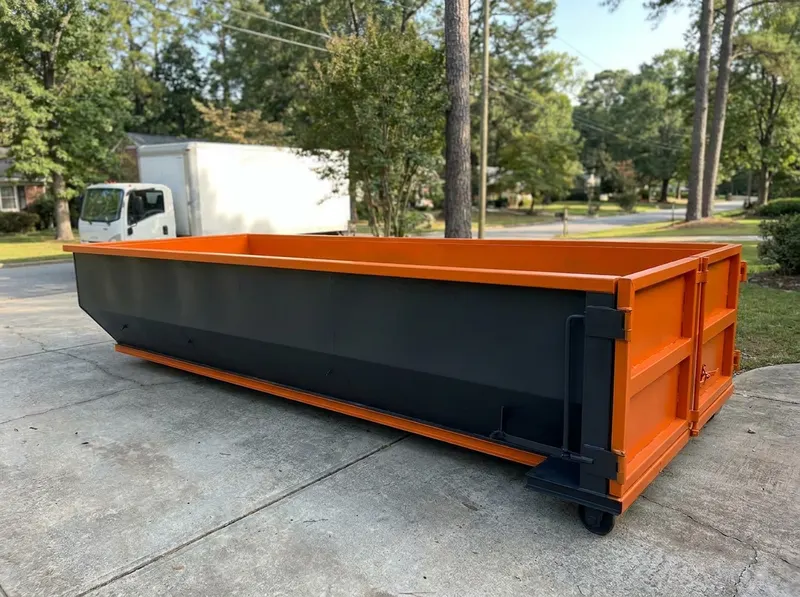
The 40-yard is the top of the five-size lineup. Powerhouse Dumpster Rental carries a 10-yard at $595, a 15-yard at $650, a 20-yard at $695, a 30-yard at $795, and the 40-yard at $895, every price flat and all-in. The 40-yard holds roughly twice what a 20-yard does, so it earns its spot on jobs where debris would otherwise fill a smaller bin two or three times over.
Step 1: measure your debris load against the container.
A 40-yard suits a full-home gut in Buckhead, a multi-unit apartment cleanout in Midtown, or a commercial tenant turnover near the Atlanta BeltLine, anything producing 12 or more pickup loads. A 30-yard at $795 fits a roof tear-off or a large garage; a 10-yard at $595 fits a single bathroom remodel. The trade-off is footprint: the 40-yard needs about 22 feet of clear driveway or lot space, which is why tight lots in Cabbagetown, Inman Park, and Grant Park sometimes point toward a 30-yard instead.
Step 2: clear the drop spot before delivery so the truck can set the bin on the first pass.
Weight matters on big bins. The 40-yard is built for bulky, lighter material, framing, cabinetry, drywall, and furniture, rather than dense loads. Concrete, brick, dirt, and roofing shingles are heavy enough that a 10-yard or 15-yard is the correct container for those, since a 40-yard packed with masonry can exceed legal road limits set under federal motor carrier weight rules.
For construction and demolition debris, the EPA's guidance on construction and demolition materials explains how lumber, drywall, and concrete get sorted for recycling. Household hazardous items stay out of every roll-off; EPA household hazardous waste rules cover paint, solvents, batteries, and automotive fluids, and electronics should route through an Earth911 recycling locator instead. Contractors managing a jobsite should also keep the loading area clear per OSHA 1926 construction standards.
Street placement in Atlanta can require a right-of-way permit; bins set on a driveway or private lot in Kirkwood, East Atlanta Village, Virginia-Highland, or West End generally do not.
The City of Atlanta planning department handles right-of-way questions, and Fulton County permitting applies to construction that needs a county permit. Step 3: a flat $895 covers the drop, the rental window, and the haul-off, one number, confirmed before the bin leaves the yard. Appliances with refrigerant, such as fridges and AC units, must have the freon removed by a certified tech under the EPA Section 608 refrigerant rules before they can go in.
For landscaping and yard-waste projects, the Georgia Environmental Protection Division covers what can be mixed into a general-debris load.
Every job gets a firm, written price after an on-site visit.
Tell us about your 40-yard dumpster rental job in Atlanta and we'll send a clear, written quote, usually the same day.
 Powerhouse Dumpster Rental